 Amihan
Cool and dry
December to February
- Sea
- 26.54 to 27.43 °C
- Rain at Tagbilaran
- 82 to 175 mm
- Season
- Dry
Guides
Language
EnglishCurrency
US dollar · $Your currency applies on GetYourGuide too.
Guide · Best time
The sea off Moalboal is warm all year, but the wind, the rain and the clarity of the water change with the monsoons. Here is what each part of the year brings and how to pick your days.
Editorial team, moalboal-diving.comUpdated October 22, 20266 minutes to read16 sources
Quick answer
Temperature is the easy part of the Moalboal diving season. NOAA's Coral Reef Watch gives monthly average sea surface temperatures for its Eastern Philippines station between 26.54 °C in February and 29.38 °C in June.2 That is a satellite average over a wide area, not a reading off Panagsama, but it shows how little the water changes through the year.
In the coolest months, January and February, the regional average sits at 26.63 °C and 26.54 °C.2 A thin wetsuit or a long-sleeved rash guard keeps you comfortable on a long snorkel or a second dive. From April to October every monthly average is 28.11 °C or more, and a thin skin suit against sun and scrapes can be enough.2
Air temperatures are just as steady. At Tagbilaran on Bohol, the nearest NOAA station, our own averages of its records put the daily high from 30.8 °C in January to 33.2 °C in May, and nights stay between 23.2 °C and 24.7 °C all year.3 What really changes between the seasons is the rain and the wind.
PAGASA, the Philippine weather service, divides the year into a rainy season from June to November and a dry season from December to May, the dry part split into a cool dry season from December to February and a hot dry season from March to May.6 The Cebu Provincial Tourism Office calls December to May the dry season and ideal for diving and snorkeling at Moalboal.1
The station figures fit that picture only in part. April is the driest month at Tagbilaran, with 56 mm and 3 days of 2.5 mm or more, while December is the wettest, with 175 mm.3 October and November bring the most rainy days, 10 and 11.3 Bohol lies across the water from Moalboal, so treat these figures as a guide to the region rather than to the town itself.
A rainy day is not always a lost day: showers can pass quickly, and the dive itself happens under water. What rain can do is cloud the water near the shore after a long downpour and make a boat crossing rough. The town asks visitors to check the weather and sea conditions before any island hopping.8 Ask your dive center which sites stay sheltered when the wind turns; a site on the far side of a point can be calm while the beach in front of your hotel is choppy.
Sea temperature
Month by month
| Month | Daylight (h) | Darkness (h) | High / low | Wet days | PAGASA season |
|---|---|---|---|---|---|
| Jan | 11.6 | 12.4 | 31 / 23 °C | 6 | Amihan, cool and dry |
| Feb | 11.8 | 12.2 | 31 / 23 °C | 6 | Amihan, cool and dry |
| Mar | 12.1 | 11.9 | 32 / 23 °C | 6 | Hot and dry |
| Apr | 12.3 | 11.7 | 33 / 24 °C | 3 | Hot and dry |
| May | 12.6 | 11.4 | 33 / 25 °C | 6 | Hot and dry |
| Jun | 12.7 | 11.3 | 33 / 25 °C | 8 | Habagat, rainy |
| Jul | 12.7 | 11.3 | 32 / 25 °C | 9 | Habagat, rainy |
| Aug | 12.5 | 11.5 | 33 / 25 °C | 6 | Habagat, rainy |
| Sep | 12.2 | 11.8 | 32 / 24 °C | 7 | Rainy, monsoon turning |
| Oct | 11.9 | 12.1 | 32 / 24 °C | 10 | Rainy, monsoon turning |
| Nov | 11.7 | 12.3 | 32 / 24 °C | 11 | Rainy, monsoon turning |
| Dec | 11.5 | 12.5 | 32 / 24 °C | 9 | Amihan, cool and dry |
NOAA records for Tagbilaran on Bohol, 1991 to 2020 (April: 1971 to 2020): mid-month daylight, the average high and low, and how many days bring at least 2.5 mm of rain.3 Season according to PAGASA.1
Three seasons
AmihanDecember to February
 The driest weeks
 Habagat, then the turn
June to November
Decision helper
Start from what matters most to you
December to May: Dry season, ideal for diving, snorkeling, beach activities, and sightseeing.
Two winds shape the year. PAGASA names December to February the season of the northeast monsoon, locally amihan, and June to August that of the southwest monsoon, habagat, with September to November the transition from one to the other.5 March to May falls between them, the hot summer months.5
Moalboal faces west, onto the Tañon Strait, with Negros Island across the water.10 That orientation decides how each monsoon feels at the dive sites. The northeast wind of amihan crosses Cebu before it reaches the west coast, while the habagat blows in from the southwest across the open strait; PAGASA's end-of-season notice for 2026 described the habagat as the rainy season over the western sections of Luzon and the Visayas.11
The dates move a little each year. PAGASA declared the end of the habagat on 5 October 2026, and in 2024 it declared the onset of the amihan on 19 November, with northeasterly winds bringing cold, dry air.1112 Follow PAGASA's announcements in the weeks before your trip rather than a fixed calendar.
Checklist
Price check
Choose a trip and the number of people
Total from$287
from, per person $144
Check availabilityfree cancellationSums multiply a trip's starting GetYourGuide price per diver by your group size and convert it with today's European Central Bank rate; your exact total appears when you book.
Video
The clip loads from YouTube only once you tap play.
Tropical cyclones are the real risk to a dive trip. Every year 19 to 20 of them enter the Philippine Area of Responsibility, and about half make landfall.9 Not every storm touches Cebu, but a passing typhoon can stop boats for days and stir up the water long after the wind has dropped.
Storms can also close a site. After Super Typhoon Odette the municipal council closed Pescador Island for three months in 2022, and no diving, snorkeling or island hopping was allowed around it so the reef could recover.1314 If a storm has just passed, ask your dive center which sites are open before you travel.
Book with that in mind. Each listing on this site lets you cancel at no charge until 24 hours ahead and pay later, which makes it easy to move a day when a storm warning appears. Keep a spare day in your plan, especially from June to November.
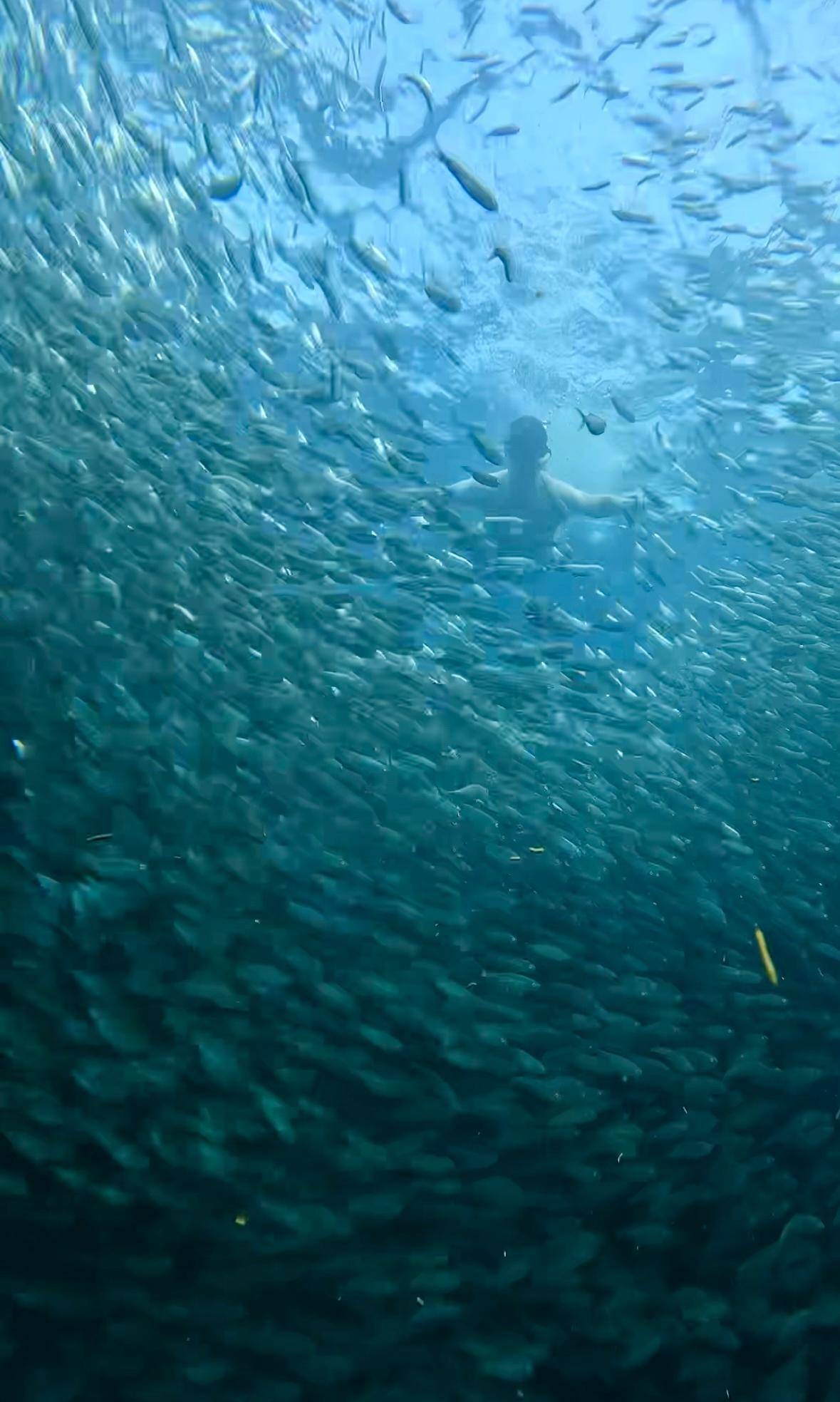
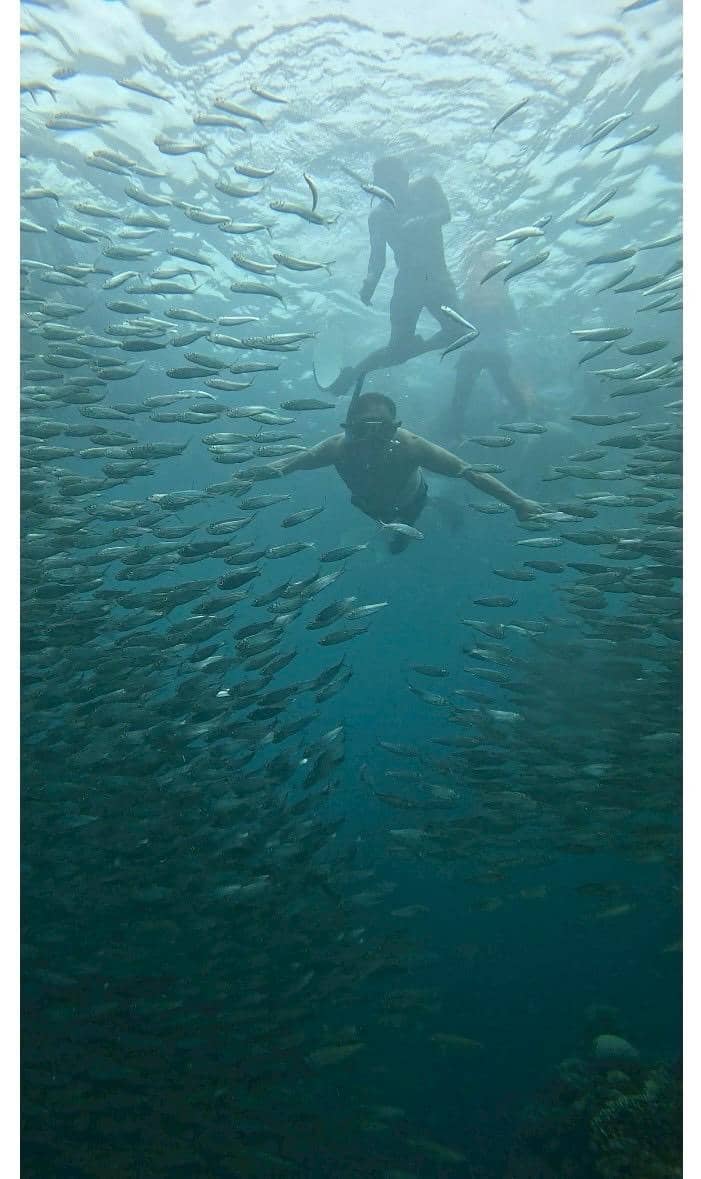
You may wonder whether there is a sardine run year round at Moalboal. The town's tourism page sends you to Panagsama Beach to swim with millions of sardines without naming a season, and its tip is about the hour, not the month: go between 7 and 9 AM, when visibility is best.4 Listings say sightings are common but cannot be guaranteed, since the fish are wild.
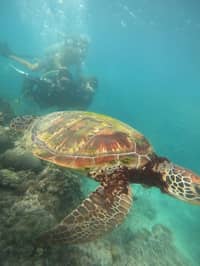
The turtles keep the same rhythm. The municipality says they are often found near the sardines or a short boat ride away, and that the best time to look is morning or early afternoon.15 In any season, an early swim gives you the calmest water and the clearest view.
One date is worth planning around. Moalboal's Kagasangan Festival is held every mid-May, with street dancing in costumes that mimic marine life, a community pledge to protect the coral reefs from destructive fishing.7 It falls in the last weeks of the dry season, which the tourism office runs to May.1
If you can choose freely, aim for the dry months, December to May.1 The cool dry months bring the amihan and slightly cooler water, the hot dry months the warmest air and, at Tagbilaran, the driest month of the year, April.63
If your trip falls in the rainy half of the year, do not cancel it. The water is at its warmest, with the regional average at 29.38 °C in June, and calm mornings still come between the showers.2 Build in spare days, dive early and keep the afternoons for whatever the weather allows. Day trips from Cebu change the timing in every season. This site's tour drives 2.5 hours before its 3 hours at Moalboal, and its listing states no start time, so ask whether you would reach the water within the early-morning window the town recommends.4 If clear water is your priority, sleep in Moalboal for at least one night, and use the day trip for the boat to Pescador.
Wherever you are in the year, plan your diving at the start of the trip, not the end. Divers Alert Network recommends at least 12 hours before flying after a single dive and 18 hours after several dives or days of diving.16 Leave the last morning for a snorkel with the sardines, which needs no waiting time at all.
Plan your dive
Hotel pickup across Cebu, an instructor, the gear and Pescador snorkeling.
December to May. The Cebu Provincial Tourism Office calls the dry season ideal for diving and snorkeling.1
Between 26.54 and 29.38 °C. NOAA Coral Reef Watch's regional monthly averages run from 26.54 °C in February to 29.38 °C in June.2
A thin one helps. In February the regional average is 26.54 °C; a long snorkel cools you faster than you think.2
June to November. PAGASA's rainy season; the dry season runs from December to May.6
19 to 20 enter the area. About half of them make landfall, by PAGASA's count.9
Not guaranteed. The town gives no season, and listings say sightings are common but not certain.4
7 to 9 AM. The town's tip for the best visibility.4
Sources